Step on the wrong scale and you might be told you're "overweight" while standing there lean and muscular. That's BMI for you — a number with real uses and real blind spots. So which should you actually pay attention to: BMI or body-fat percentage? This article explains what each one truly measures, where BMI quietly fails, and why the metric you track changes the entire way you judge your progress.
What BMI measures
Body Mass Index is simply your weight in kilograms divided by your height in metres squared. It was invented in the 1830s by a Belgian mathematician — not a doctor — to describe populations, not individuals. As a fast public-health screen across thousands of people, it does a reasonable job.
Its weakness is obvious once you say it out loud: BMI cannot tell muscle from fat. It only knows your total weight and height. So a muscular athlete and a sedentary person of the same height and weight receive the identical BMI, despite having completely different bodies, health profiles, and needs.
This is why fit, strong people are routinely misclassified as "overweight" or even "obese" by BMI alone. A 95 kg rugby player at 12% body fat and a 95 kg desk worker at 32% body fat are worlds apart — and BMI sees them as twins.
What body-fat percentage measures
Body-fat percentage tells you what your weight is actually made of — the proportion that's fat versus everything else (muscle, bone, organs, water). It's a far more meaningful number for both health and appearance, because two people at the same body-fat percentage look and function similarly regardless of what the scale or BMI says.
Rough categories for reference:
- Men — athletic 6–13%, fitness 14–17%, average 18–24%, high 25%+
- Women — athletic 14–20%, fitness 21–24%, average 25–31%, high 32%+
Women naturally and healthily carry more essential fat than men — it's required for hormonal function — which is why the ranges differ. Comparing your number to the wrong column is a common and discouraging mistake.
Why two people at the same weight can look completely different
Here's the concept that reframes everything: muscle is far denser than fat. A kilo of muscle takes up roughly 18% less space than a kilo of fat. So two people of identical height and weight can look dramatically different — one tight and athletic, the other softer — purely because of how their weight is divided between muscle and fat.
This is also why the scale can stall while you're visibly improving. If you lose 2 kg of fat and gain 2 kg of muscle, the scale reads zero change while your body, your clothes, and your mirror tell a completely different (and better) story. Judge that month by the scale alone and you'd wrongly conclude you'd failed.
How to measure body fat
You don't need a lab. Practical options, from accessible to gold-standard:
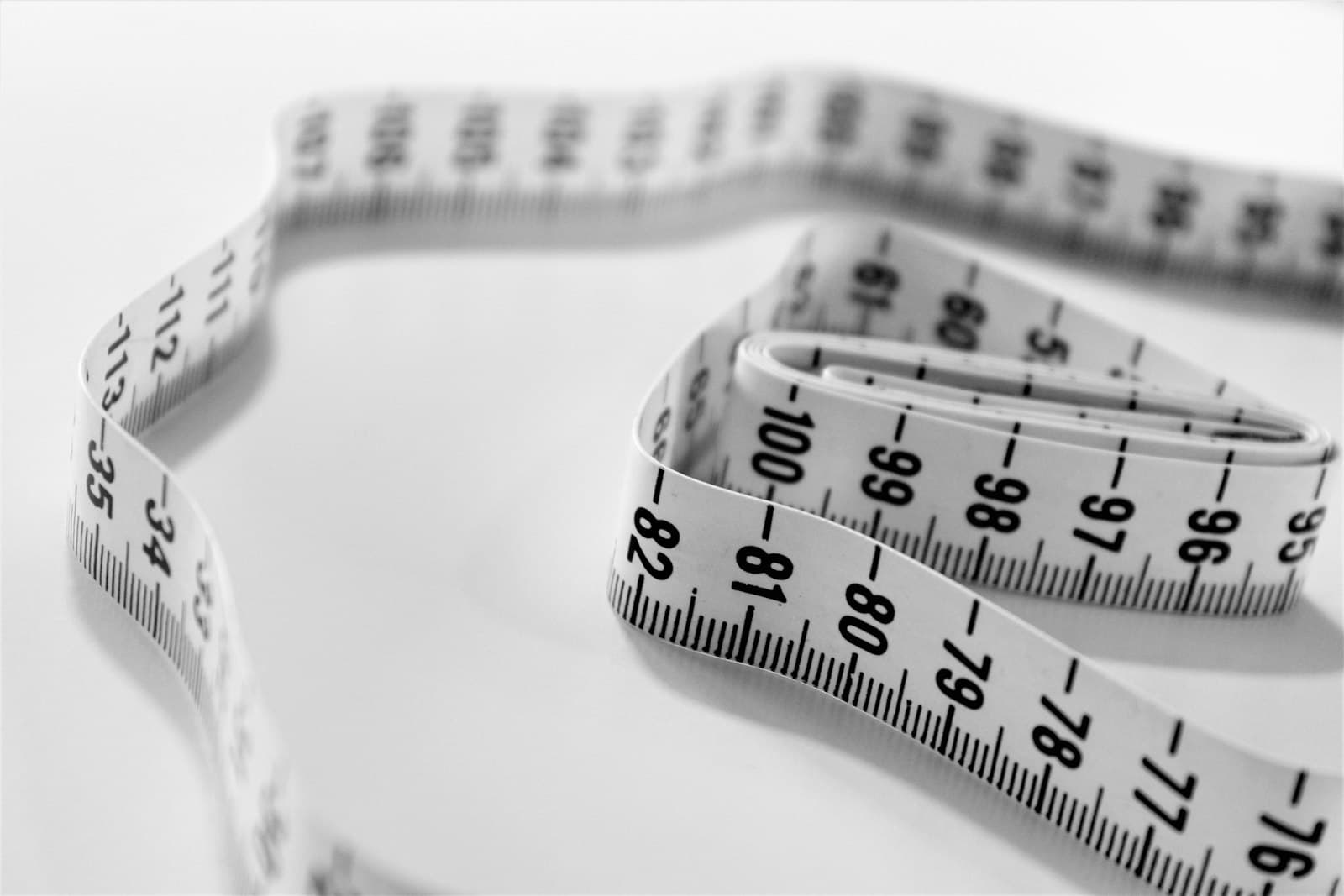
- Tape measurements (U.S. Navy method) — quick, free, and surprisingly consistent for tracking change over time
- Skinfold calipers — accurate in trained hands, cheap, repeatable
- Bioelectrical impedance (smart scales) — convenient but easily thrown off by hydration; trust the trend, not any single reading
- DEXA scan — the gold standard for accuracy, but costly and best used occasionally
For a fast estimate, our free body composition tool calculates both your BMI and your body-fat percentage from a few tape measurements — so you can see for yourself exactly how misleading BMI alone can be.
So which matters?
For most people chasing a leaner, healthier, stronger body, body-fat percentage is the metric that matters. BMI is a useful five-second screen and still has a role in flagging health risk at the population level — but it can't see the thing you're actually trying to change: your composition.
The real win is tracking your body-fat percentage over time. Watching it fall while your weight barely moves is concrete proof you're losing fat and keeping muscle — the exact goal of any good transformation, and something the bathroom scale will never show you on its own.
Measure what matters
We track body composition with every client, every week, because the trend — not the scale, not BMI — is what guides smart decisions. If you want your real numbers measured properly and a plan built around them, book a free consultation.