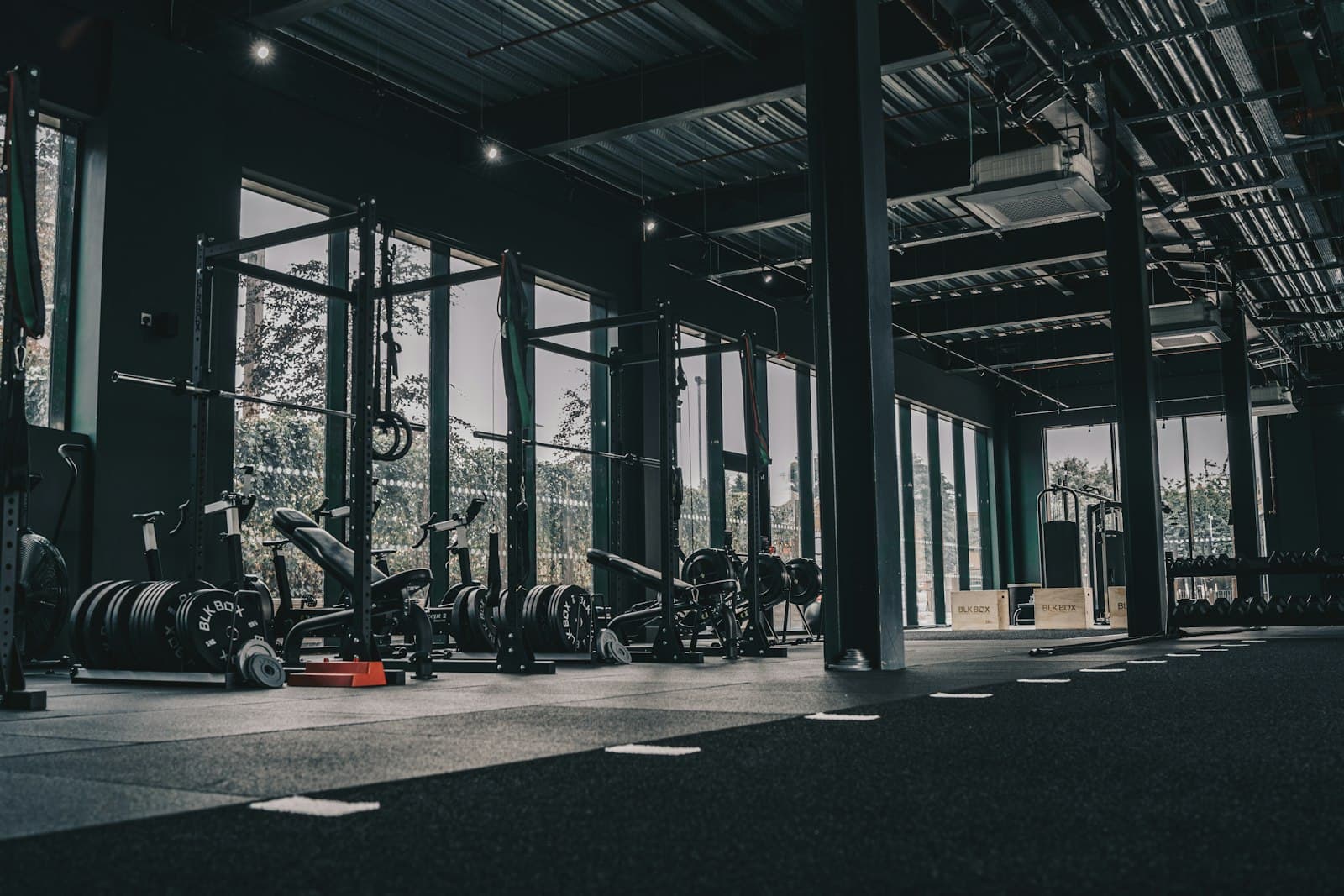
The hardest rep you'll ever do is the one that gets you through the gym door the first time. Once you're in, it's far simpler than the wall of machines and confident regulars makes it look. This guide strips away the intimidation and gives you exactly what a beginner needs — and what to ignore.
First, the truth about ‘everyone is watching’
They're not. This is the single biggest fear that keeps beginners away, and it's almost entirely imagined. Everyone in the gym is focused on their own session, their own playlist, their own next set. The few who do notice a beginner feel quiet respect, not judgement — they remember being there. Every strong, confident person in that room was once exactly where you are. You belong from day one.
Keep it simple: compound movements
Beginners waste months on isolation exercises and machines that work one small muscle at a time. The fastest progress comes from compound movements — exercises that work multiple muscle groups at once:
- Squat (legs, glutes, core)
- Hinge / deadlift (posterior chain — hamstrings, glutes, back)
- Push (chest press, shoulder press, push-ups)
- Pull (rows, lat pulldowns)
Master a handful of these and you've covered your whole body efficiently. You do not need fifteen exercises per session — you need a few done well and progressed consistently.
Form before load — always
The temptation is to lift heavy fast. Resist it. For your first few weeks, the goal is to groove the movement pattern with light weight: learn the path, feel the right muscles working, build the connection. Ego-lifting with bad form is the fastest route to injury and the slowest route to results. Start lighter than you think, nail the technique, then add load. A coach or even a few honest phone videos of your lifts accelerate this enormously.
The one principle that drives all progress
If you remember one thing, make it this: progressive overload. Your body changes only when you ask slightly more of it than last time. That means gradually adding reps, weight, or sets over the weeks:
- Week 1: 3 sets of 8 with a given weight
- Week 3: 3 sets of 10 with the same weight
- Week 5: add a little weight, back to 8 reps, and repeat
Small, steady increases compound into dramatic change over months. No magic programme beats this simple principle applied consistently.
How often, and how to split it
For a beginner, training each muscle group twice a week is the sweet spot for progress and recovery. The simplest effective structures:
- 3× full-body per week (great for beginners — every session hits everything)
- 4× upper/lower split (two upper-body days, two lower-body days)
Either works. The best programme is the one you'll actually show up for, three or four times a week, for months.
Nutrition and patience
Training is the stimulus; nutrition and sleep are where the results are built. You don't need perfection — just enough protein (a portion at most meals), mostly wholefoods, and enough sleep to recover. And give it time: visible change takes a couple of months, not a couple of weeks. To set a realistic expectation for your goal, our transformation timeline tool maps it out honestly.
What to ignore
- Fat-burner supplements and ‘detox’ teas — useless
- Complicated ‘muscle confusion’ routines — progressive overload beats novelty
- Comparing your day 1 to someone else's year 5
The bottom line
Walk in, do a few compound lifts with good form, add a little over time, eat enough protein, sleep, and repeat. That's 90% of it. The other 10% — dialling in your specific programme and technique — is where a coach pays for itself by saving you months of trial and error.
If you'd like to start with expert guidance instead of guesswork, book a free consultation.